 By
Dirt coming off a surface in a clean line is satisfying to watch, and it is also the fastest way to understand what a pressure washer actually does. Below are six jobs photographed mid-clean, with what each one takes: how much pressure, which nozzle, and the mistake that ruins the surface.
1. A concrete driveway, half done
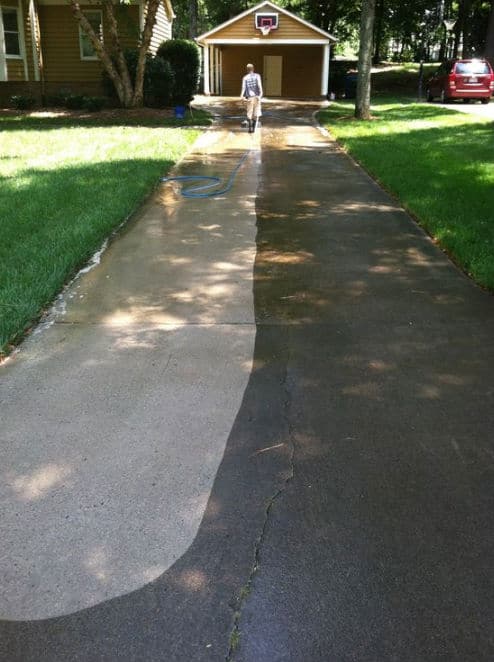
This is the job people buy a machine for, and the one that punishes an underpowered one. Concrete wants volume, not just pressure: around 2.5 GPM and 3000 PSI through a surface cleaner attachment. A wand alone leaves the stripe marks you can see starting at the top of this slab.
Full method in our guide on pressure washing a concrete or brick driveway. If the stains are rust rather than dirt, pressure alone will not shift them: see removing rust stains from concrete.
2. A go-kart, before and after
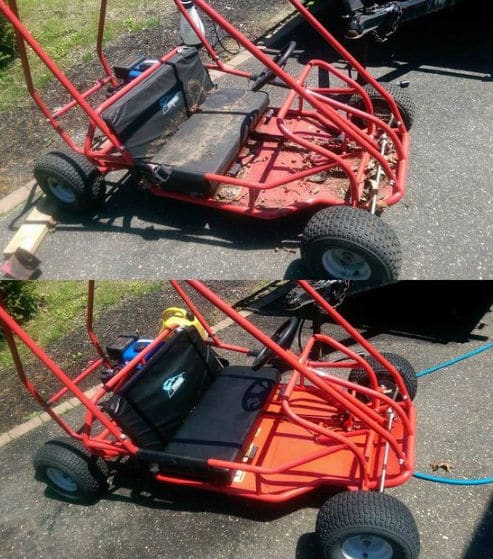
Tube frames, mowers, quads and trailers are where a pressure washer saves the most time, because a brush cannot reach into the frame at all. Use a 25 degree tip, stay about a foot back, and keep the spray off bearings, chain and any sticker you want to keep.
An electric machine at around 2000 PSI is plenty here. Gas pressure on painted tube will take the paint with the mud.
3. A concrete patio mid-wash
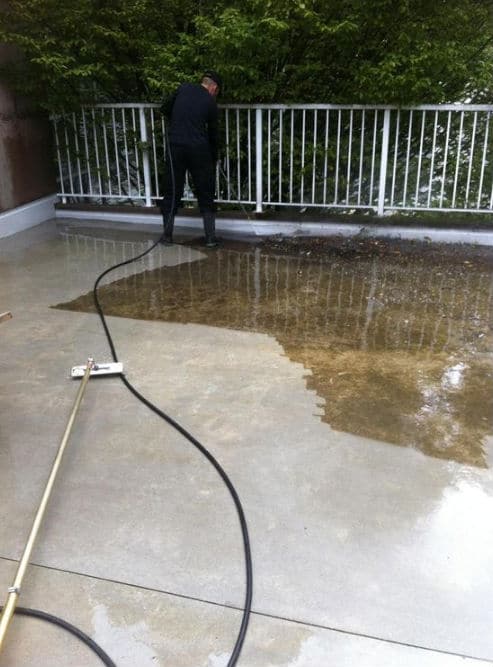
Two things in this photo matter. He is working in overlapping passes in one direction, which is how you avoid the striping, and the water has somewhere to run. Flood a patio that drains toward the house and you have moved your problem rather than solved it.
A surface cleaner would finish this faster and more evenly than the wand he is using. Worth reading: water brooms against surface cleaners and which attachments are actually worth owning.
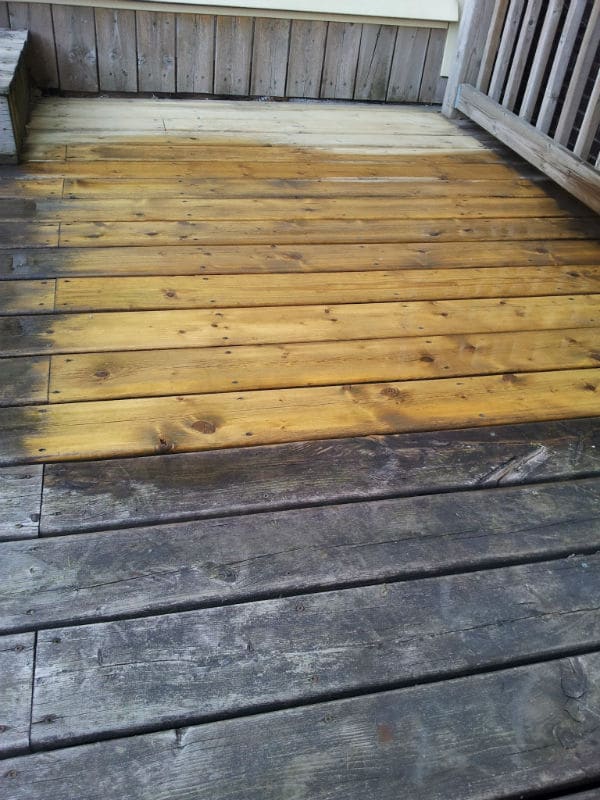
4. Wood decking being stripped back
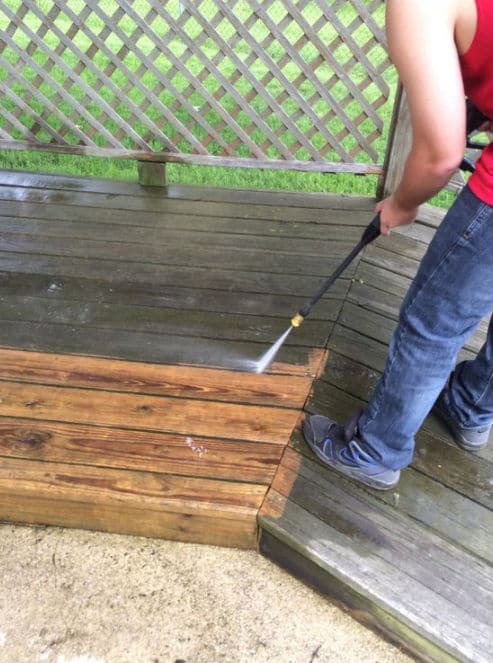
Wood is the surface most often ruined by a pressure washer. That grey layer comes off easily, which fools people into getting closer and turning the pressure up, and then the grain lifts and furs. Stay under 1500 PSI, use a 40 degree tip, keep the wand moving with the boards and never stop in one spot.
Step by step in how to pressure wash a deck without damaging it.
5. Concrete steps, half cleaned
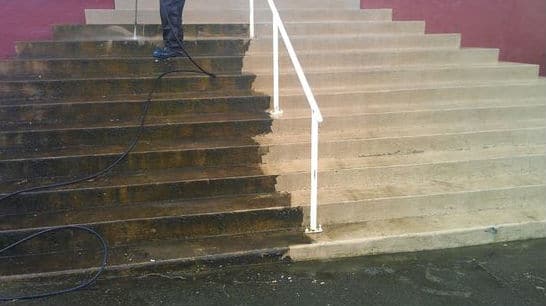
Steps are worth doing for safety, not looks. The dark layer on the untouched half is usually algae, and wet algae on a step edge is genuinely slippery. Work top down so the runoff does not resoak what you have finished.
If it comes back within a season, the problem is shade and damp rather than cleaning. A detergent made for the job kills the growth instead of just blasting the surface layer off.
6. Deck boards, dirty beside clean
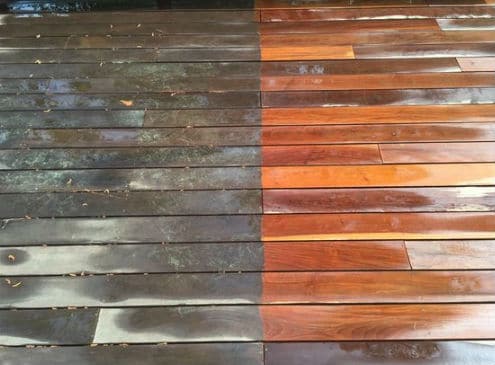
The color on the right is not just clean wood, it is clean wood that has been sealed after drying. Washing strips the old finish along with the grey, so a deck you pressure wash is a deck you have committed to resealing. Give it two or three dry days first.
What it takes to do these jobs
Five of the six above are comfortably within an electric machine. Only the driveway really wants gas, because of the flow rate rather than the pressure.

- 2030 PSI rated, 1.76 GPM max flow, 14.5-amp motor
- Our bucket test measured 1.81 GPM, ahead of the figure on the box
- Enough for cars, decks, steps, siding and patio furniture
- Five nozzles and two soap tanks, 24 lb to carry

- 3400 PSI at 2.5 GPM, which is what long driveways need
- 208cc CRX engine on an OEM Technologies axial cam pump
- 61 lb, 49-state compliant, so not sold into California
- Overkill for a car, and it will strip soft wood if you let it
Whichever you pick, the nozzle on the end decides whether you clean the surface or damage it, and it is the part people ignore. Our full comparison is in the best pressure washers.