 By
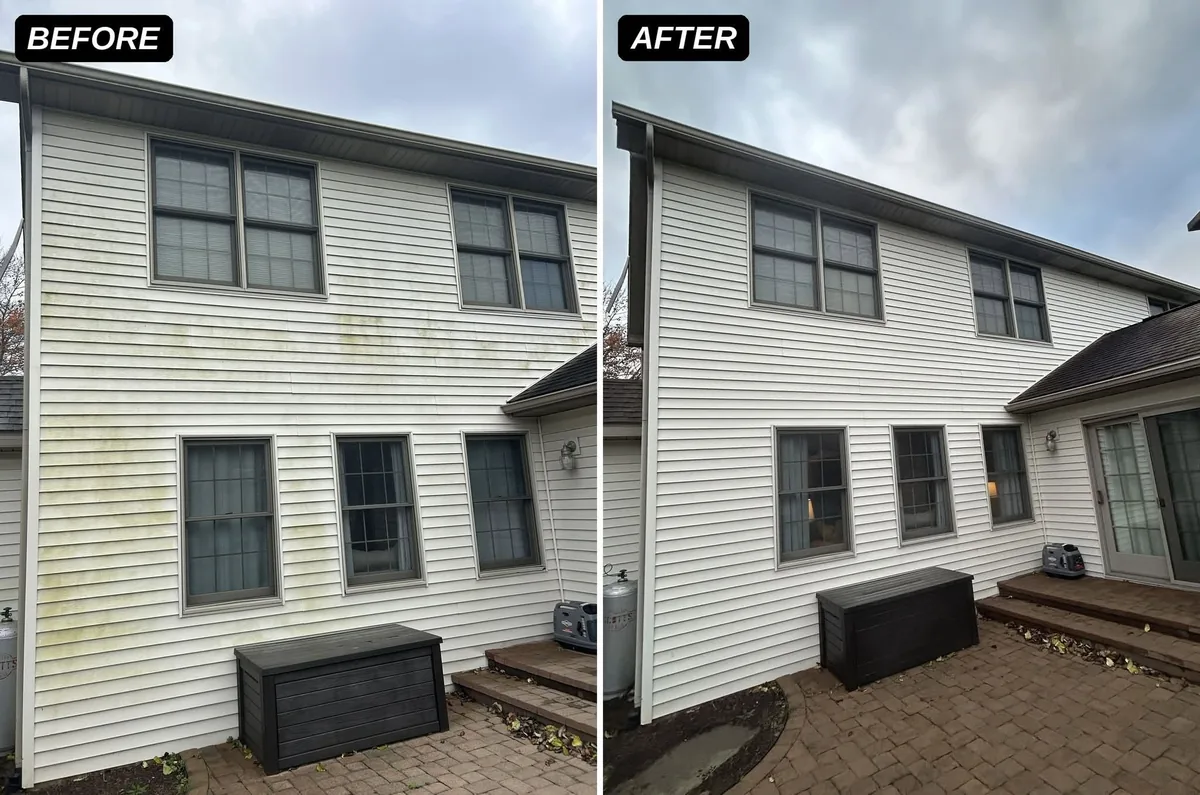
Mold and mildew growth is a common problem on exterior surfaces like siding, fences, and decks. Not only is it unsightly, but mold can also damage surfaces and be a health hazard if left unchecked.
We conducted an experiment testing three popular cleaning agents to determine which works best for removing mold from exterior siding. The three cleaning methods tested were: dish soap, bleach, and a specialty “house and siding” pressure wash product.
What we recommend buying

- Shifted the mould where dish soap could not
- Dilutes 1 part to 5 parts water for heavy staining
- Safer around plants and painted surfaces than bleach
- Still needs rinsing off before it dries

- Same family, 172 fl oz instead of 128
- Works out cheaper per wash on a full house
- Concentrate, so you mix it yourself

- No mixing: the sprayer dilutes as it goes
- The easiest option to use of the four
- Costs more per wash than a concentrate
- We did not put this through the same test
Whichever product you use, it still needs a machine behind it. Our pressure washer buying guide covers what handles siding without damaging it, and choosing the right nozzle matters even more than the detergent on this job.
How we got to these picks, and the step by step method, is below.
Why Mold Grows on Siding
Mold is a type of fungus that spreads through tiny spores. It thrives in warm, damp, shaded areas on building exteriors. Common areas for mold on siding include under overhangs or porches, behind shrubs/trees, and on the north facing sections of homes that get less direct sunlight.
Over time, unchecked mold growth results in black or dark green staining along with gradual damage to the surface material itself. It’s important to routinely clean and inhibit mold to protect the integrity and aesthetics of the siding. Harsh mold infestations may even penetrate deeper and impact structural integrity.
Evaluating the Cleaning Products
For our test, we selected three products that a typical homeowner would have on hand or could easily purchase.
Dawn Dish Soap
As a popular surfactant, Dawn excels at breaking down oils and helping lift surface dirt. However, dish soap alone doesn’t have specific properties to kill mold or remove deeper stains. While great for dishes, we hypothesized Dawn would have limited mold removal abilities.
Clorox Bleach
Bleach is the classic mold removal ingredient. The sodium hypochlorite in bleach dissolves mold and other fungal growth. We diluted regular Clorox bleach with 4 parts water to 1 part bleach to create a strong cleaning solution.
While highly effective, caution must be used when applying bleach around wood surfaces, stained wood finishes, painted surfaces, and plants. Bleach can easily damage these materials with overexposure.
Zep House and Siding Pressure Wash
As a specialty product marketed for exterior cleaning, the Zep pressure wash contains detergents as well as proprietary chemicals designed to remove mold, stains, grime, and mildew. The bottle’s instructions recommend diluting 1 part Zep with 5 parts water for heavy stains.
Unlike bleach, the Zep wash is generally safer for plants, newly stained, or painted surfaces. However, it still carries a risk with enough overexposure.
Application Process
We tested each cleaning product on a section of black mold growth on weathered cedar siding. For uniform application, we used pump spray bottles filled with each diluted cleaning solution.
The process went as follows:
- Mist the target area until thoroughly wetted
- Let sit for 15-30 seconds
- Use a stiff scrub brush to agitate the area
- Rinse thoroughly with clean water
We performed this test application individually with the Dawn soap mix, Zep cleaner, and diluted bleach solution.
Evaluating the Results
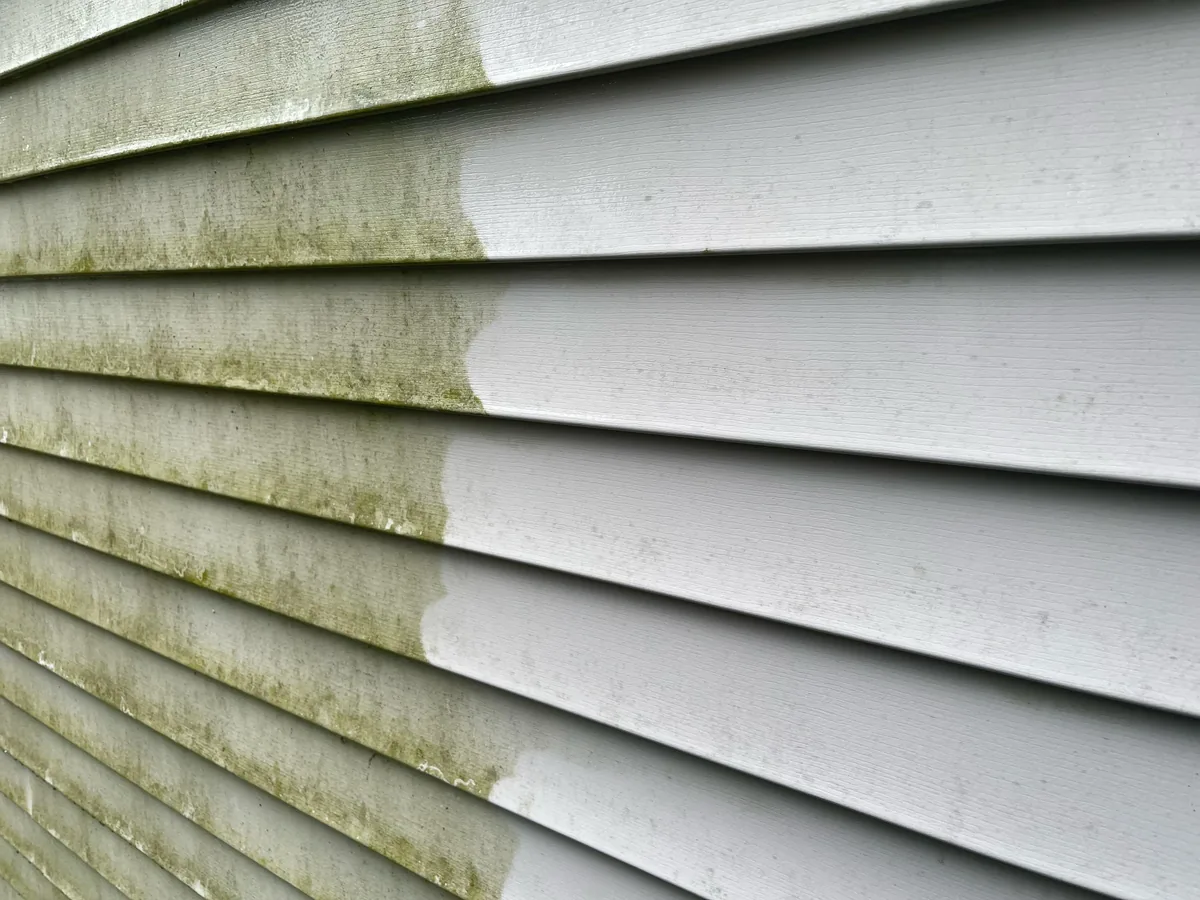
Upon close inspection, noticeable differences emerged between the three cleaning methods:
Dish Soap – The Dawn removed loose surface debris, but left the black mold staining largely intact even after scrubbing. Without reactive chemicals to breakdown mold, soap alone is insufficient for removing established mold growth.
Bleach – The diluted bleach solution completely removed all traces of mold from the siding with minimal scrubbing needed. When properly mixed and applied, bleach is extremely effective at destroying and removing mold.
Zep Pressure Wash – Similarly to the bleach cleaner, the Zep wash broke down and lifted off the mold staining with little effort. While pricier than homemade bleach mixtures, this commercial wash works just as well.
The Most Effective Option Overall
While the Zep pressure wash proved highly effective, for cost purposes I recommend choosing an application-specific bleach solution instead.
Commercial mold cleaners are convenient, but bleach has unmatched mold-killing abilities with the correct dilution. Plus concentrated bleach allows proper mixing for large jobs compared to pre-mixed products.
However, customers lacking pressure washing equipment will achieve satisfying DIY results with store-bought cleaners like the Zep. The Zep also carries lower risks around delicate surfaces.
Professionals should use bleach alternatives that allow tighter control over application strength. Custom solutions also minimize risks of pump corrosion from repeated bleach exposure. Targeted commercial chemicals provide mold killing power without ruining equipment.
Safe Application Practices
When working with either bleach or commercial washes, take precautions to avoid plant and surface damage:
- Pre-wet surrounding plants/grass before and after cleaning
- Cover or block flower beds and vegetation to limit overspray
- Keep solutions off unfinished wood, wicker, or stained surfaces
- Rinse immediately if solutions contact other surfaces
With proper handling, dilution, application, and rinsing, both bleach solutions and commercial cleaners effectively and safely remove mold from siding and other exterior surfaces.