 By
The cordless machines worth buying now
Nine years ago this page was a prediction about what battery pressure washers would look like by 2026. Several are now on sale, so here they are first, then what the prediction got right and wrong.
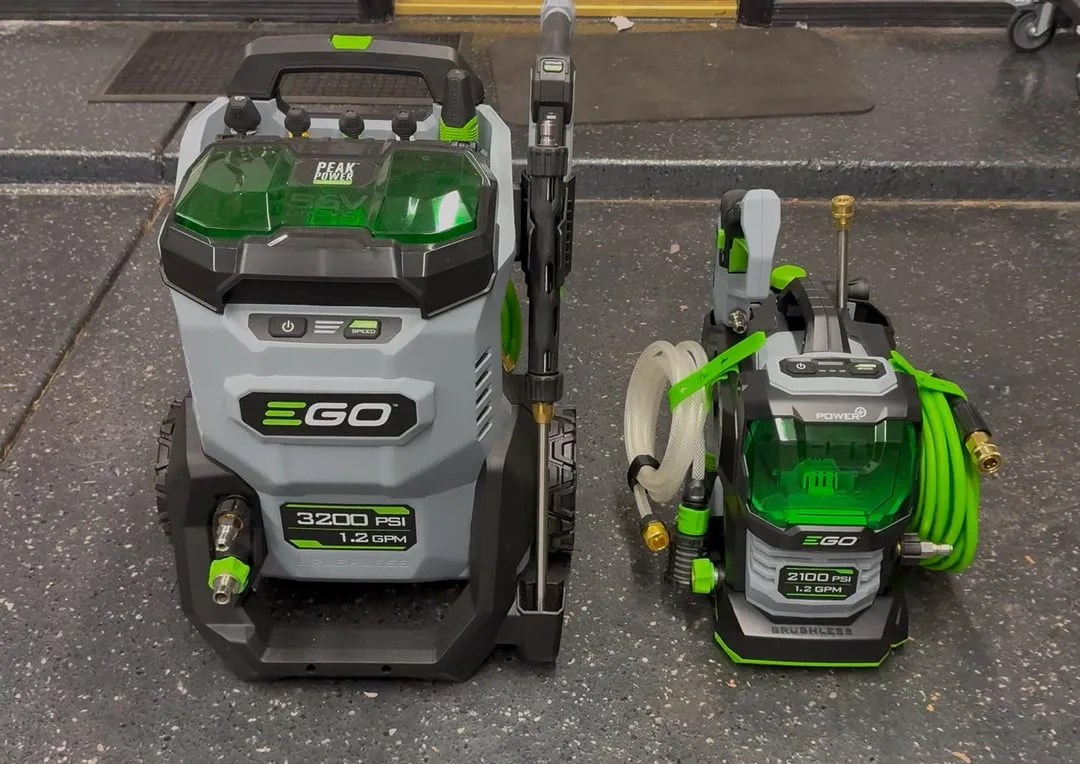

- Draws on two 56V ARC Lithium packs at the same time
- Rated 3200 PSI at 1.2 GPM, up to 2.0 GPM through the short gun
- EGO quotes up to 60 minutes on two 6.0Ah packs
- Sold as a bare tool, 36.2 lb without a battery fitted

- 1500 PSI at 1.2 GPM, on par with a mid range corded electric
- Rated 79 dBA where most corded units sit above 90 dBA
- Bay holds two 40V packs, roughly 20 minutes of trigger time each
- Boost mode for the full 1500 PSI, lower default for light work

- Runs off a socket for 1800 PSI at 1.1 GPM, or off two 60V packs
- On battery it steps down to about 1500 PSI and 1.0 GPM
- Hands over to the second pack by itself when the first runs flat
- 26.9 lb, onboard soap tank, batteries sold separately
All three are sold as bare tools or need packs you may not own yet, so check what is in the box before you order.
Handheld cleaners, which are a different thing
These two come up constantly in cordless searches, and they are useful, but they are not pressure washers. At 450 to 550 PSI they are closer to a garden hose with a good nozzle. Worth owning for the jobs they suit, worth knowing the difference before you buy one expecting to clean a driveway.

- 550 PSI at 1.0 GPM, which is garden hose territory, not driveway territory
- Draws from a bucket, a lake or a tap through a siphon hose
- Battery and charger come in the box, so no extra platform to buy into
- Right for bikes, boots, dog paws and muddy gear, wrong for siding

- 450 PSI at 0.9 GPM using two 20V packs together
- The single battery Hydroshot models manage only 320 PSI
- Two 2.0Ah packs, dual charger, 4-in-1 nozzle and a 20 foot draw hose
- Think portable rinser rather than pressure washer
What the 2017 prediction got right, and wrong
The call back then: by 2026 a cordless machine would run 2 to 3 hours on a charge, beat corded electrics on cleaning power by 10 to 20 percent, and undercut them on cost.
Right on power. The EGO is rated 3200 PSI at 1.2 GPM. That is more pressure than any residential corded electric sold today, and more than many entry level gas machines.
Right that the brands would show up. In 2017 there was one credible option. Now EGO, RYOBI, Greenworks and DEWALT all sell something cordless, and Greenworks hedged by building a unit that runs off either batteries or a socket.
Wrong on runtime. Nothing runs 2 to 3 hours. EGO quotes up to 60 minutes on two 6.0Ah packs, and the RYOBI gives roughly 20 minutes per pack. Pumps draw a lot of current, and energy density did not double the way the lithium-ion trend line suggested.
Wrong on cost. Cordless has not become the cheap option. A bare tool plus two packs and a charger still adds up to well over what a comparable corded electric asks.
Why the runtime is still short
A 40V 5.0Ah pack holds about 180 watt-hours. The brushless motors in these machines pull somewhere near 1,500 watts under load. That arithmetic alone caps you around the 20 minute mark, and no amount of motor efficiency closes a gap that size.
To match a gas machine on flow you need a bigger pump, which pulls more current, which needs a bigger pack. Scale that to an hour of continuous flow at gas-machine GPM and the battery is about the size of a cereal box. That is why these units are pressure first and flow second: pushing PSI is cheaper on current draw than pushing GPM.
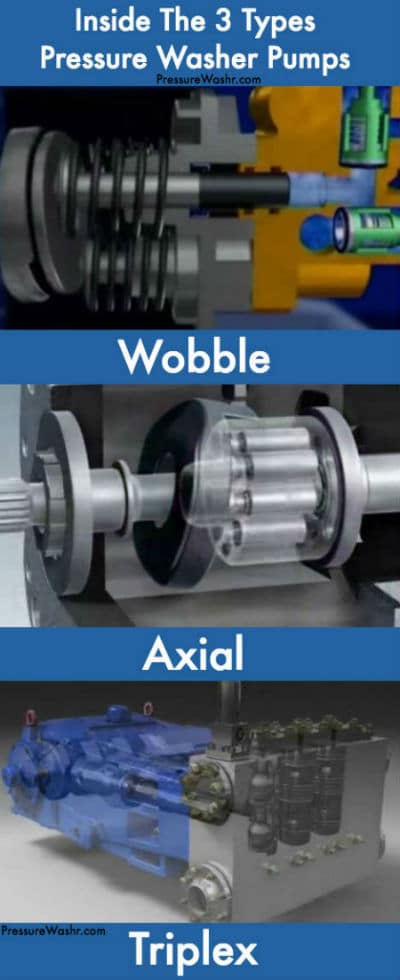
It is also why the pump and motor pairing matters more on a cordless machine than on anything with a cord.
Where cordless actually makes sense
- No socket within reach. Boat, campsite, trailer, the far corner of an acreage. This is the case cordless wins outright.
- Noise matters. The RYOBI at 79 dBA against a 90 dBA plus corded unit is the difference between an electric shaver and a kitchen blender. That counts on a dense street or an early Saturday.
- You already own the batteries. Four EGO or RYOBI packs in the garage changes the maths completely, since the bare tool is all you are adding.
- Short jobs. A car, bikes, patio furniture, a set of steps. Twenty minutes is plenty for any of those.
What cordless still does not do is a full driveway or a whole house in one go. For those, a medium-duty corded or gas machine and a long extension cord remain the faster answer.
A closer look at the RYOBI
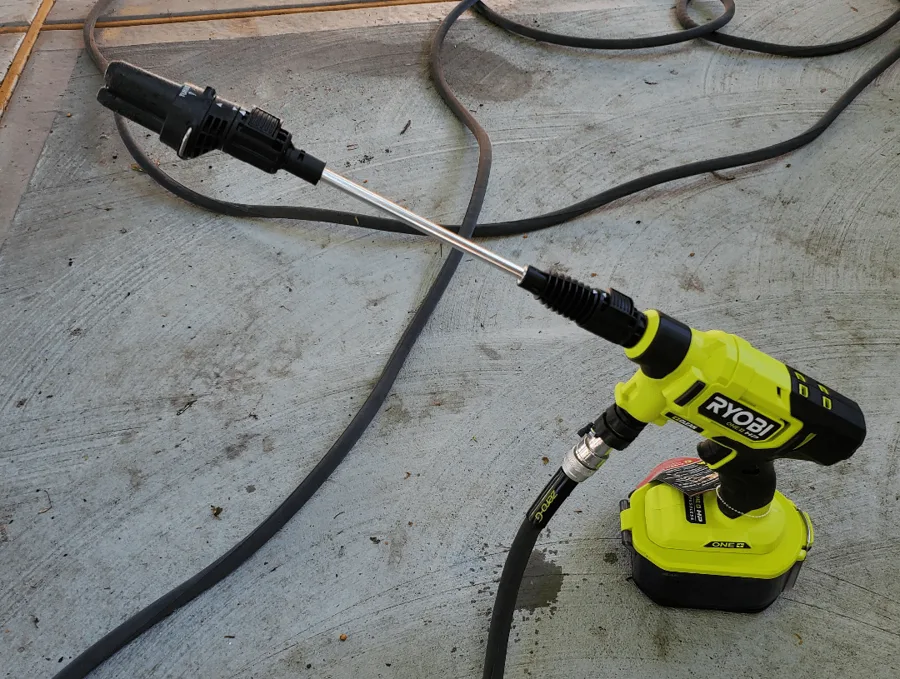
RYOBI put this one in its Whisper Series for a reason. The noise figure is the headline feature, not the pressure. You get corded-electric cleaning power in a shape you can carry anywhere, and the trade is runtime.
The onboard bay takes two packs, so about 45 minutes of total trigger time with both full. Plan the job around that rather than hoping to stretch it.


What would make cordless the default
- An hour of continuous trigger time on one pack, not 20 minutes
- Flow above 1.5 GPM, since cleaning power is GPM multiplied by PSI and flow is the half that is lagging
- Kits as standard, with batteries and charger in the box rather than sold separately
Two of those three moved in the right direction since 2017. Runtime is the one that has not, and until it does, cordless stays the machine you buy for where you can take it rather than for how much it cleans.
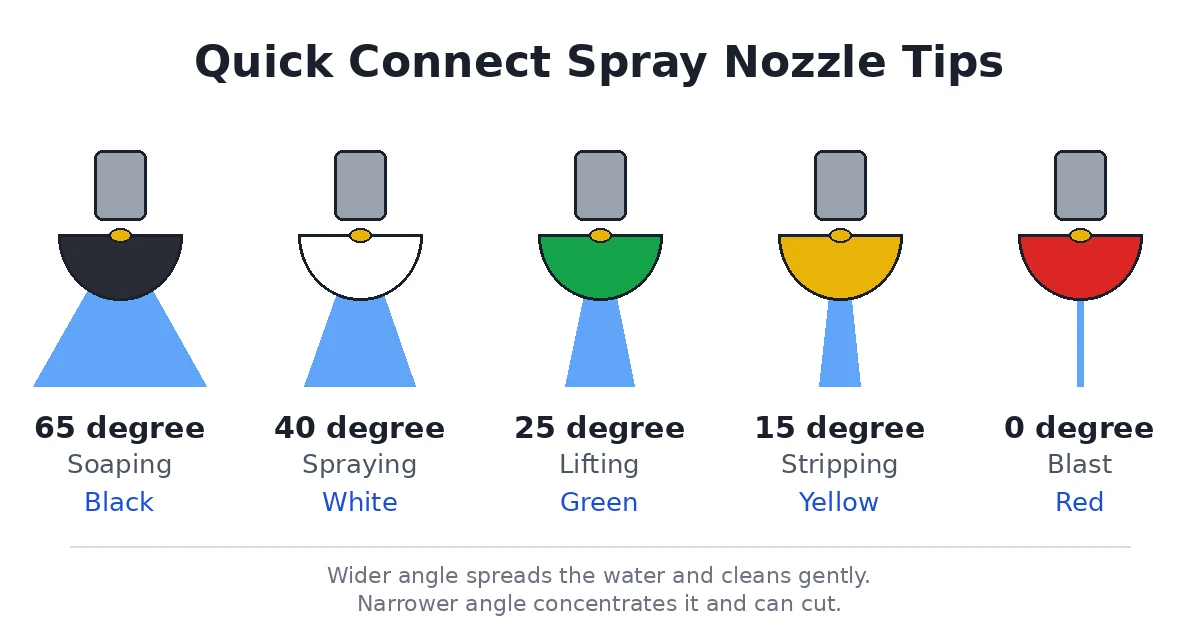
Whichever type you land on, the nozzle you fit changes the result more than the last 200 PSI on the spec sheet.