 By
A pressure washer is a mechanical tool that produces a high-pressure water stream powered by an internal combustion or electric motor. It is most commonly used for cleaning dust, mold, algae, dirt, and similar types of build-ups, on outdoor surfaces such as:
- Driveways
- Decks
- Roofs
- Outdoor house walls
Or basically, any surface made of:
- Concrete
- Vinyl (PVC)
- Brick
- Asphalt
- Aluminum
There are a couple of “gray” areas that can be pressure-washed but should be approached with caution, such as cars and roofs.
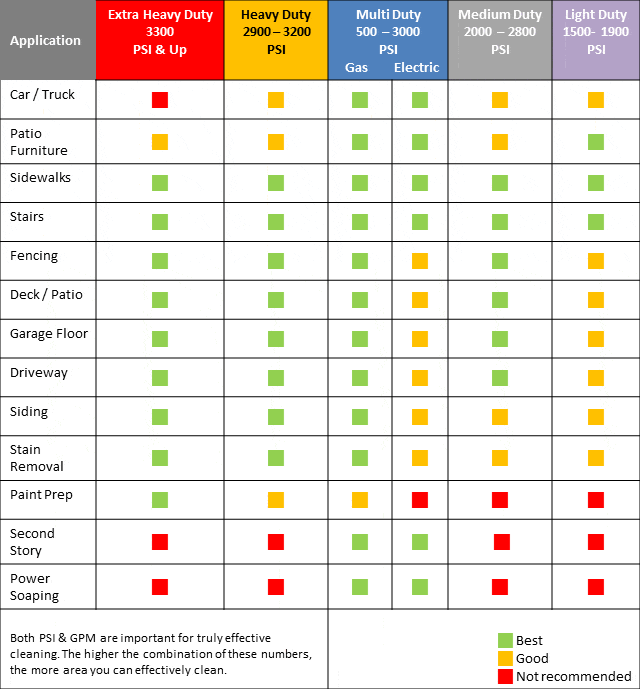
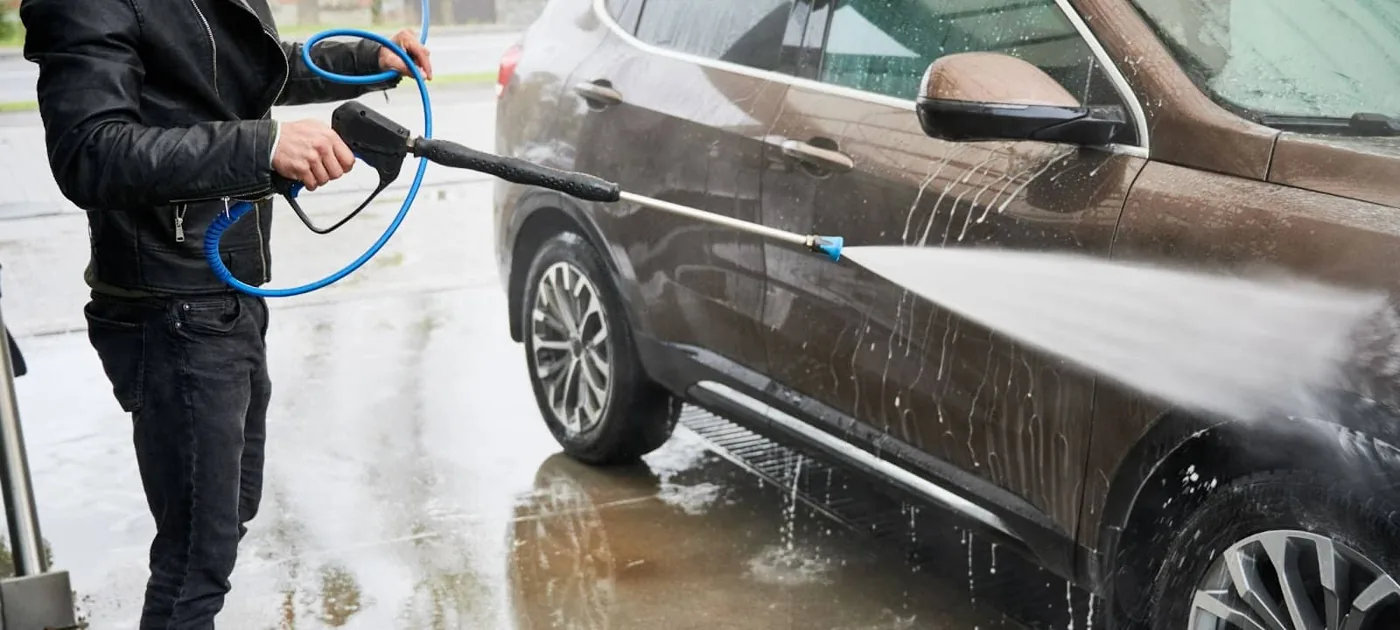
Regarding cars, it’s safe to use a pressure washer if its pressure per square inch (PSI) is below 1500. However, most electric pressure washers operate at around 1900 psi which is enough power to damage the paint or other parts of your vehicle, so caution is advised.
This is also true for roofs; as they weaken over time, pressure-washing can cause damage to the roof tiles, especially the roof shingles, which are usually made of asphalt.
How Does a Pressure Washer Work
Since water cannot be compressed, applying pressure will push it outward in every direction. Therefore, when channeled through a single nozzle, it creates a powerful stream which is the base principle of every pressure washer system.
A pressure washer consists of two central parts; a power source (engine) and a water pump, followed by the water inlet and the hose as the secondary components.
The power source can be either an electric motor or a gasoline engine. Electric motors are usually fitted into smaller models with less power capacity, while gasoline engines withhold more force.
On the other hand, the pump can be an axial or a triplex pump which uses three plungers to regulate the water.
Once you turn on the pressure washer, the starter engages the drive cup on the flywheel and rotates the crankshaft. The crankshaft engages the piston, which moves up and down. Their interaction starts off the ignition process.
Magnets are built into the flywheel, which, when engaged by rotation, creates a magnetic field that induces electricity. Meanwhile, the piston travels down the cylinder opening the intake valve and forming a vacuum that draws air and fuel through the carburetor, creating an intake stroke of the engine.
Furthermore, the piston goes to the top of the cylinder as the intake valve closes, making a compression stroke. That’s when the spark plug ignites the compressed air and fuel, producing a power stroke. Finally, the exhaust valve opens, allowing the combustion gasses to escape through the muffler. The engine repeats these cycles, which powers the pressure washer.
This complex process can be elaborated into a few simple steps:
- Once turned on, the engine powers the washer.
- The water pump draws water from the faucet and combines it with detergent (if added).
- The water is channeled through the hose into a high-pressure stream, whose power is determined by the attachment you use.
How the Pump Creates the Pressure
The engine or motor only turns the pump. The pump itself does not create pressure either: it moves a fixed amount of water with every revolution, and the pressure appears because that water is forced through a nozzle far smaller than the hose feeding it. Change the nozzle and you change the pressure, which is why the same machine reads very differently with a 0 degree tip fitted than with a 40 degree one.
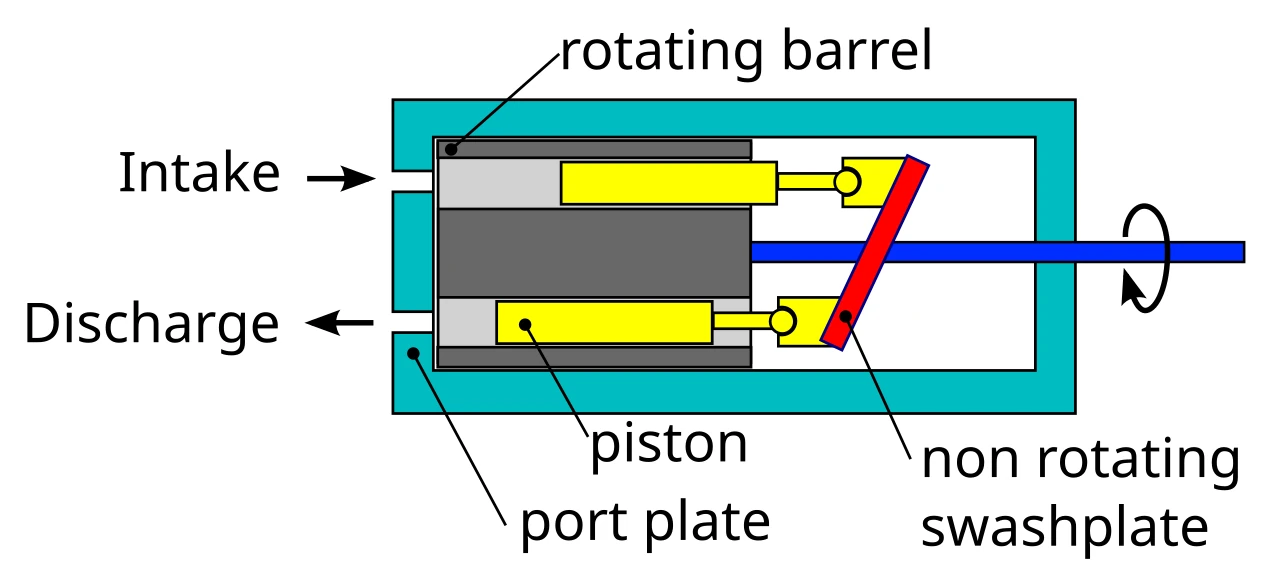
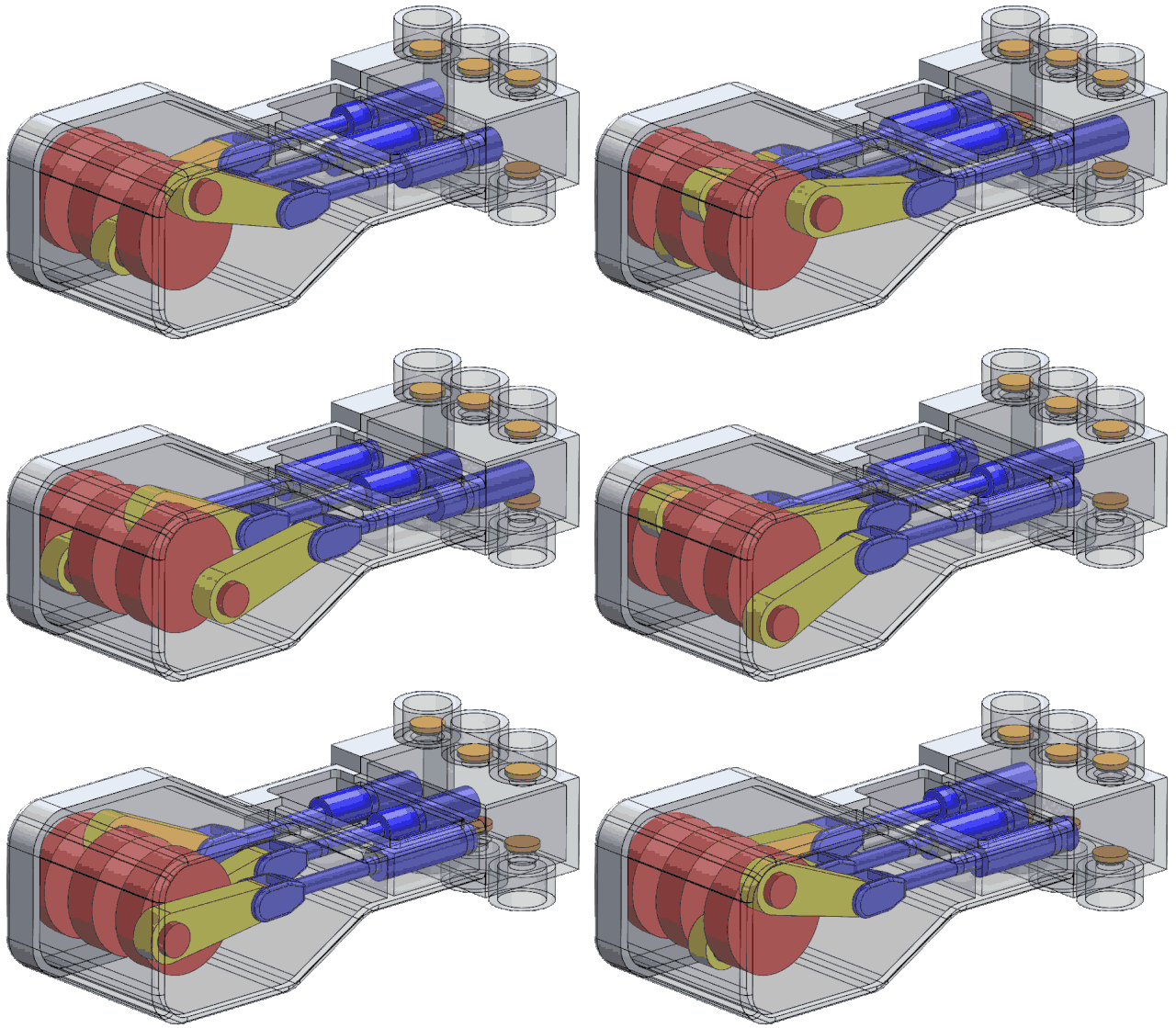
On most electric machines the pump is driven by a wobble plate, a swash plate set at an angle that converts the motor’s rotation into the back and forth movement of three pistons. Each piston draws water in on the way back and pushes it out on the way forward. Larger machines use a triplex pump, where three plungers are driven by a crankshaft instead, which runs cooler and lasts longer but costs considerably more.
What the unloader valve does
Let go of the trigger and the water has nowhere to go, yet the pump keeps turning. The unloader valve is what stops that from destroying the machine. It diverts the flow back to the pump inlet so the water circulates instead of building pressure against a closed gun, and on many machines a total stop switch cuts the motor a moment later.
There are two kinds, and they behave differently in the hand:
- Trapped pressure unloaders hold the pressure in the hose after you release the trigger, which is why you get a small pop when you squeeze it again.
- Flow actuated unloaders bypass the water straight away, which avoids pressure spikes and keeps the pump from overheating.
Either way, the water that circulates during bypass is also what cools and lubricates the pump head. Run the machine dry, or leave it in bypass for long stretches, and the brass or aluminum head gets hot enough to damage itself permanently.
Why pressure problems are usually not the pump
When a machine loses pressure the pump gets the blame, and most of the time the fault is upstream of it. Before anything else, check the water going in:
- A clogged inlet screen, which is the single most common cause
- Air trapped in the system after the hose has been disconnected
- A valve stuck open or closed inside the pump
- A supply hose that cannot deliver the flow the pump is rated for
Feeding a machine from a buffer tank is where this bites hardest. A direct drive pump does not draw water well on its own, so it needs either head pressure from a raised tank or a separate feed pump, plus a supply hose of at least one inch that will not collapse under suction. Get that wrong and the pump cavitates, which sounds like gravel in the housing and wears it out quickly.
What’s the Difference Between a Power Washer and a Pressure Washer?
A power washer is very similar to a pressure washer – both will create a powerful pressurized stream of water, with the main difference being that a power washer heats up the water.
Although subtle, this element can make a big difference when cleaning particular residues, such as chewing gum, moss (hot water prevents it from growing back), or severe build-up of dirt, grease, and other types of debris. Basically, power washing is the solution when cleaning areas with extreme build-up.
However, the hot water adds additional risk to damaging the materials it cleans, especially painted surfaces, wood, and other softer materials, as it is harsher than cold water. That’s where the pressure washer takes advantage as it is better suited for lighter cleaning jobs which are the most typical for average users.
Wrapping Up
A pressure washer is a tool with very versatile usage, and it can be extremely helpful for efficiently cleaning various surfaces. However, since it is highly powerful, it can cause damage to the surface you are cleaning if not handled properly or if you use it on materials that are not suited for pressure washing. It’s best to keep it two feet (60 cm) away from the surface you are cleaning while maintaining a sweeping motion to ensure the best results while preserving the safety of both yourself and the cleaning surface.